
As a Lean Product Manager, your role involves efficient product development, rapid iteration, and seamless collaboration. A critical aspect of your work is creating and refining user interfaces (UI) and user experience (UX) designs. To help you make an informed decision, this blog post compares two popular design tools—Figma and Adobe XD—in the context of Lean Product Management.

Figma is a web-based collaborative design tool used for creating user interfaces (UI) and user experience (UX) designs. It allows designers to create and prototype designs in real-time, collaborate with team members, and gather feedback from stakeholders.
Figma offers a range of features such as a vector editing tool, design libraries, prototyping capabilities, and design version control. It also supports plugins that extend its functionality. With its cloud-based nature, Figma enables multiple users to work simultaneously on the same design file, making it easy for teams to collaborate remotely.
Figma has gained popularity in the design community due to its ease of use, cross-platform compatibility (Windows, macOS, and Linux), and the ability to share designs with stakeholders without requiring them to install any software. It has become a go-to tool for many designers and design teams for creating and sharing UI/UX designs.
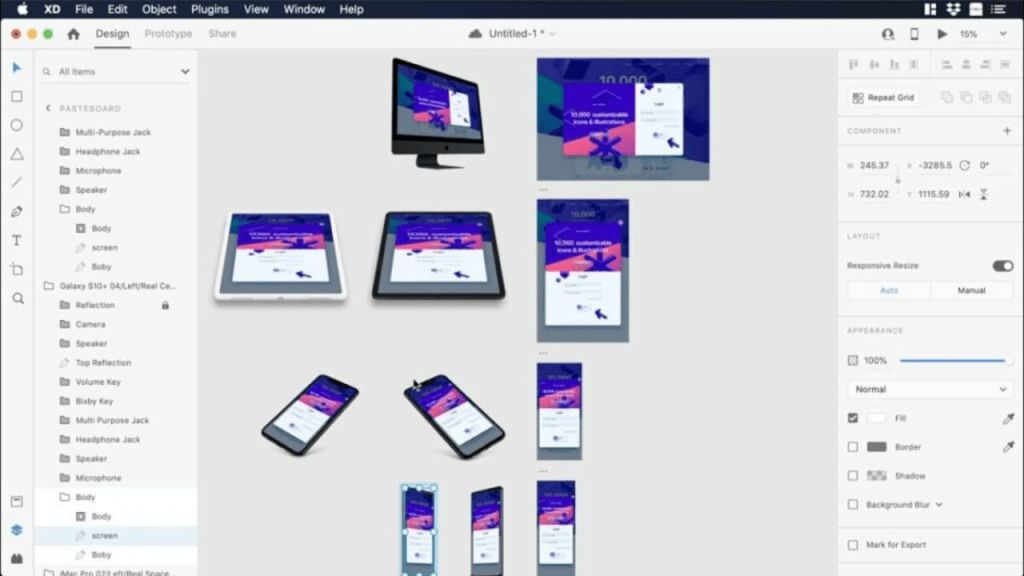
Adobe XD is another popular design tool used for creating user interfaces (UI) and user experience (UX) designs. It is part of the Adobe Creative Cloud suite of applications.
Adobe XD provides a range of features and tools specifically designed for UI/UX design. It allows designers to create interactive prototypes, wireframes, and designs for websites, mobile apps, and other digital interfaces. The tool offers a visual design interface with vector-based drawing tools, layout grids, and reusable design components. It also supports animations, transitions, and micro-interactions to create interactive and immersive experiences.
With Adobe XD, designers can collaborate with team members and stakeholders through design sharing and commenting features. It integrates with other Adobe Creative Cloud applications such as Photoshop and Illustrator, allowing for seamless design workflow between different tools. Additionally, it supports plugins and integrations with third-party applications to extend its functionality.
Adobe XD has gained popularity among designers and design teams due to its integration with the Adobe ecosystem, its intuitive interface, and the ability to create interactive prototypes. It has become a popular choice for UI/UX designers, especially those already using other Adobe products.
- Collaboration and Teamwork: Both Figma and Adobe XD excel in facilitating collaboration among team members and stakeholders. Figma’s cloud-based platform allows real-time collaboration, enabling multiple team members to work on a design simultaneously. This feature is particularly beneficial for Lean Product Managers who value seamless teamwork, efficient feedback loops, and reducing time-to-market. Adobe XD also offers collaboration features but primarily relies on file sharing and commenting. However, Figma’s live collaboration capabilities give it an edge in this aspect.
- Rapid Prototyping: Lean Product Managers emphasize quick prototyping to gather feedback and validate assumptions. Adobe XD offers robust prototyping capabilities, enabling you to create interactive and high-fidelity prototypes without much effort. Its integration with other Adobe tools like Photoshop and Illustrator provides additional design flexibility. On the other hand, Figma also provides powerful prototyping features, including animations and transitions, allowing you to create immersive and interactive experiences. Both tools offer the necessary functionality for rapid prototyping, but Adobe XD’s integration may benefit designers already using Adobe’s ecosystem.
- Design Workflow and Flexibility: When it comes to the design workflow, Figma adopts a web-based approach, making it accessible on various operating systems without sacrificing functionality. This flexibility aligns well with Lean Product Managers working on cross-platform projects or distributed teams. Adobe XD, while also compatible with Windows and macOS, is a standalone application that might be preferred by designers who extensively use other Adobe tools. It’s worth noting that Figma’s cloud-based nature allows for seamless version control and easy sharing of design components and libraries, which can significantly enhance efficiency and consistency in Lean Product Management.
- Plugins and Integrations: Both Figma and Adobe XD support plugins and integrations to extend their functionality and streamline workflows. Adobe XD benefits from its integration with other Adobe tools, providing a comprehensive suite for designers who prefer an all-in-one solution. Figma, on the other hand, offers a growing ecosystem of plugins and integrations that cater to diverse needs. This flexibility allows Lean Product Managers to customize their design environment and leverage additional features as required.
Choosing the right design tool as a Lean Product Manager is crucial for effective collaboration, rapid prototyping, and streamlined workflows. Figma’s cloud-based nature, real-time collaboration, and cross-platform accessibility make it an excellent choice for Lean Product Managers working in fast-paced, distributed teams. Adobe XD’s integration with other Adobe tools and its robust prototyping capabilities may be more suitable for designers already invested in the Adobe ecosystem. Ultimately, the choice between Figma and Adobe XD depends on your specific needs, team dynamics, and existing design tool preferences.
Remember, as a Lean Product Manager, your focus should be on the outcome rather than the tool itself. Prioritize seamless collaboration, quick iteration, and efficient feedback loops when selecting a design tool. Both Figma and Adobe XD can support your Lean Product Management efforts, so evaluate your requirements and choose the tool that aligns best with your workflow and team dynamics.
Key Takeaways
- Collaboration and teamwork are essential for Lean Product Managers, and both Figma and Adobe XD offer collaboration features. However, Figma’s real-time collaboration and cloud-based platform provide a seamless and efficient experience for distributed teams.
- Rapid prototyping is crucial for Lean Product Managers to gather feedback and validate assumptions. Adobe XD and Figma both offer powerful prototyping capabilities, but Adobe XD’s integration with other Adobe tools may benefit designers already using the Adobe ecosystem.
- Consider the design workflow and flexibility requirements of your team. Figma’s web-based approach allows for cross-platform accessibility, while Adobe XD’s standalone application may be preferred by designers using other Adobe tools extensively.
- Plugins and integrations play a role in extending functionality. Adobe XD benefits from its integration with other Adobe tools, while Figma offers a growing ecosystem of plugins and integrations to cater to diverse needs.
- Ultimately, choose a design tool that aligns with your specific needs, team dynamics, and existing tool preferences. Prioritize collaboration, rapid prototyping, and efficient feedback loops in your decision-making process.
 Leonardo Sanchez Biondini